7 Hidden Magical Towns in Jalisco, Mexico You Should Visit Before Everyone Else Does
Forget Tequila and the usual weekend getaways for a moment. Beyond Jalisco’s best-known destinations lies another side of the state: mountain villages, colonial towns, thermal springs, historic mining communities and places where mariachi, agave spirits and centuries-old traditions are still part of everyday life.
When international travelers think of Jalisco, a few images usually come to mind.
Tequila.
Mariachi.
Guadalajara.
Puerto Vallarta.
Perhaps Lake Chapala or a cabin in the mountains of Mazamitla.
All of them deserve their reputation. But they represent only a fraction of what one of Mexico’s most culturally influential states has to offer.
There is another Jalisco.
One of quiet plazas, stone churches, traditional kitchens, forest roads, former mining settlements, family-run workshops and mountain communities where tourism has yet to completely reshape everyday life.
And for travelers increasingly searching for authentic experiences rather than crowded attractions, this lesser-known Jalisco may be the most rewarding one of all.
Mexico’s Pueblos Mágicos, or Magical Towns, are communities recognized for their cultural heritage, history, architecture, traditions, cuisine or natural surroundings.
Jalisco has 12 of them.
Some — particularly Tequila, Mazamitla, Tapalpa, Ajijic and Tlaquepaque — have become established tourism destinations.
Others remain surprisingly unfamiliar to international visitors.
That doesn’t necessarily mean nobody visits them. Nor is there an official ranking declaring these the least-visited towns in Jalisco.
Something more interesting is happening instead:
they still feel like discoveries.
If you’re looking for places that make you want to say, “How did I not know about this?”, start here.
1. Temacapulín: The Magical Town That Refused to Disappear
Some towns are beautiful because of their architecture.
Others become unforgettable because of their story.
Temacapulín has both.
Known affectionately as Temaca, this small community in the Los Altos region of Jalisco became one of Mexico’s newest Magical Towns in 2023.
At first glance, it embodies the timeless appeal of rural Jalisco: a traditional church, quiet streets, surrounding hills and the slow rhythm of a community far removed from Mexico’s major tourism corridors.
But Temacapulín’s contemporary history makes it extraordinary.
For years, the community became known for its resistance to plans associated with the El Zapotillo dam, which threatened the town with flooding.
Residents fought to preserve their homes, heritage and community.
Today, murals and public spaces keep parts of that struggle alive, transforming a walk through Temaca into something much deeper than sightseeing.
This is a town that quite literally fought for the right to remain on the map.
Hot springs in the highlands
Temacapulín also has a long association with thermal waters.
Its name is linked to the Náhuatl word temazcalli, referring to traditional steam or bathing practices, and the area’s naturally warm waters continue to be one of its attractions.
Visitors can combine the town’s historical atmosphere with a relaxing visit to local thermal pools, including the La Peñita area.
Why visit now?
Because Temacapulín offers something increasingly rare in popular destinations:
the feeling of arriving before mass tourism does.
Don’t come expecting a theme park or an itinerary packed with attractions.
Come to walk.
Sit in the plaza.
Visit the church.
Listen to local stories.
Soak in the thermal waters.
And admire the highland landscape surrounding the town.
Sometimes the best travel experiences are precisely the ones that don’t require rushing anywhere.
Best for: slow travel, cultural travelers, couples, photography, hot springs and travelers looking for places with a strong sense of community.
2. Cocula: Everyone Knows Mariachi. Few Know the Town Behind the Music
Mariachi is one of Mexico’s great contributions to world culture.
sely associated with its origins.
That place is Cocula.
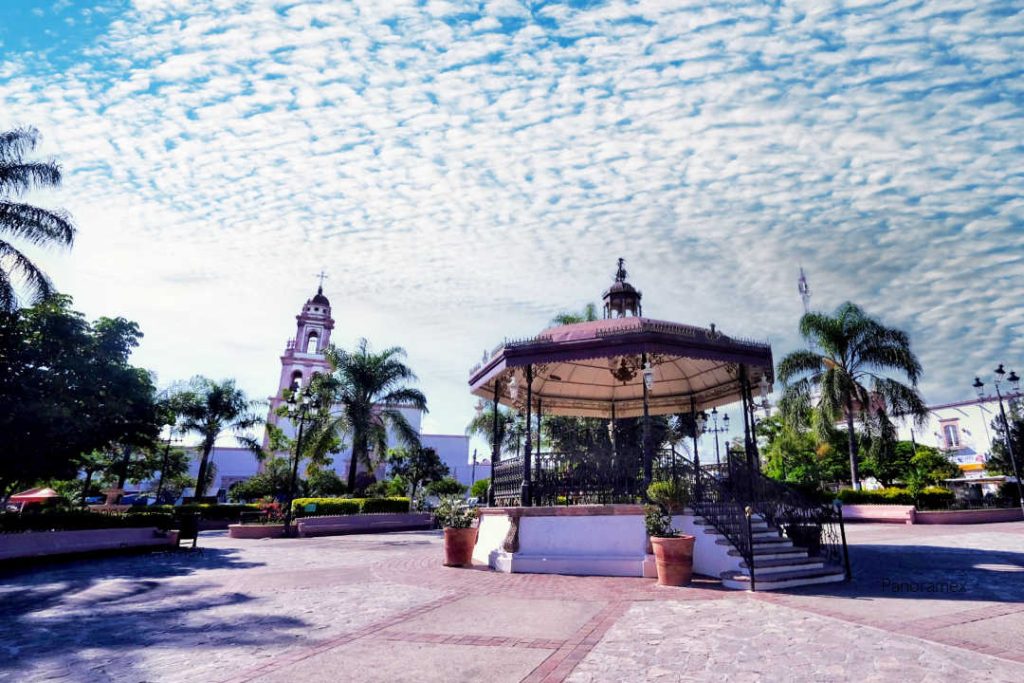
Often celebrated as the birthplace or cradle of mariachi, Cocula became a Pueblo Mágico in 2023.
And that creates a fascinating contradiction:
mariachi is internationally famous, while Cocula remains largely unknown abroad.
That alone makes it worth visiting.
To experience Cocula is to understand that mariachi is much more than musicians performing beside a restaurant table.
It emerged from a cultural landscape.
From fiestas.
From community gatherings.
From generations of musicians.
From rural Jalisco.
From family traditions passed down long before mariachi became an international symbol of Mexico.
Here, the music feels less like a tourist performance and more like living heritage.
Come hungry
Music may provide the soundtrack, but food completes the experience.
Cocula is also an excellent place to discover traditional Jalisco cooking, particularly birria, the slow-cooked, deeply seasoned meat dish that has become increasingly popular far beyond Mexico.
Walk through the center.
Look for local musicians and mariachi history.
Eat without rushing.
Talk to people.
And consider just how extraordinary it is that a relatively small town helped shape one of the world’s most recognizable musical traditions.
Why Cocula could become much bigger
Cocula has nearly everything a cultural destination needs:
music, identity, history, food, proximity to Guadalajara and a story recognizable around the world.
Yet it still feels distinctly local.
That combination may not last forever.
Best for: music lovers, Mexican culture, food travelers, photographers and first-time visitors who want to go deeper than Mexico’s most familiar cultural symbols.
3. Sayula: A Cultural Escape in Southern Jalisco
Thousands of travelers have passed near Sayula on their way somewhere else.
That may have been the town’s biggest tourism problem.
For years, Sayula was somewhere you traveled through rather than somewhere you traveled to.
That is beginning to change.
Named a Pueblo Mágico in 2023, Sayula combines historical architecture, regional cuisine, artisan traditions and the relaxed atmosphere of southern Jalisco.
This isn’t a destination that overwhelms you with attractions.
It grows on you.
Walk through its historic streets.
Look inside workshops.
Try regional sweets.
Spend time around the main square.
Notice the architecture.
Let yourself slow down.
That rhythm is part of the appeal.
In the land of Juan Rulfo
For literature lovers, there is another reason to explore this part of Jalisco.
This is Juan Rulfo country.
Rulfo, one of Latin America’s most influential writers and author of Pedro Páramo and The Burning Plain, was born in this broader region of southern Jalisco.
The landscapes, rural communities, silences and atmosphere of this part of Mexico deeply shaped his literary universe.
Traveling through the region can sometimes feel like entering the physical landscape behind his fiction.
For English-speaking travelers who love literature, this adds a completely different dimension to the trip.
Sayula’s quiet appeal
Sayula isn’t trying particularly hard to impress you.
And that’s exactly why it can.
It belongs to a category of destinations where having time becomes the luxury.
Time to walk.
Time to eat.
Time to talk.
Time to look around.
Best for: literature, architecture, regional cuisine, handicrafts and cultural road trips from Guadalajara.
4. Mascota: Mountains, Raicilla and a Different Side of Jalisco
Yes, the town really is called Mascota.
Spanish speakers sometimes smile at the name because mascota also means “pet.”
But once you arrive in the mountain valley surrounding the town, the name becomes irrelevant.
The landscape steals the attention.
Known as the Emerald of the Sierra, Mascota combines mountain scenery, traditional architecture, small surrounding communities and one of western Mexico’s most fascinating agave spirits:
raicilla.
If tequila is Jalisco’s international superstar, raicilla is its intriguing, less famous relative.
Made from different varieties of agave and produced in parts of western Jalisco, raicilla has its own denomination of origin and a long regional tradition.
For travelers fascinated by mezcal and tequila, exploring raicilla country can feel like discovering a whole new chapter of Mexico’s agave culture.
One of Jalisco’s most photogenic ruins
Among Mascota’s most unusual landmarks is the unfinished Temple of the Precious Blood of Christ.
Construction began in the 19th century but was never completed.
Today, stone walls, arches and vegetation coexist in a setting that feels almost deliberately designed as a romantic ruin.
It wasn’t.
And that imperfection is precisely what makes it beautiful.
Mascota is also surrounded by forests, lakes, mountain roads and rural landscapes worth exploring.
Stay rather than rush
Mascota works particularly well for travelers willing to spend the night.
Wake up early.
Explore the countryside.
Visit small producers.
Try regional food.
Look for raicilla.
Watch the stars.
This isn’t simply a town to check off a list.
It’s a base for discovering an entire mountain region of Jalisco.
Best for: nature, couples, scenic road trips, photography, agave spirits and boutique stays.
5. San Sebastián del Oeste: A Former Mining Town Lost in the Mountains
Whitewashed houses.
Red-tile roofs.
Cobblestone streets.
Coffee roasting nearby.
A small central plaza.
Mist drifting through the mountains.
San Sebastián del Oeste can sometimes feel less like a tourist destination and more like a place where someone accidentally stopped the clock.
Hidden in the Sierra Madre mountains inland from Puerto Vallarta, this former mining town grew in importance during Mexico’s colonial period.
Its historical identity was closely connected to silver and gold mining, and traces of that prosperity remain visible in its traditional architecture.
But getting there is part of the experience.
Traveling inland from Puerto Vallarta takes you through one of Jalisco’s great changes of scenery.
The tropical Pacific coast gradually gives way to mountain forests.
The temperature changes.
The vegetation changes.
The architecture changes.
Even the pace seems to change.
Coffee, raicilla and mountain views
San Sebastián doesn’t need giant attractions.
Its appeal comes from things that were once simply part of everyday life:
locally grown coffee, raicilla, traditional buildings, mountain roads and small family businesses.
The surrounding mountains also provide excellent viewpoints, including the area around Cerro de la Bufa, where clear days can deliver spectacular panoramas extending toward the Pacific region.
Stay for coffee.
Walk the streets.
Explore the mountain landscape.
And don’t schedule every hour.
San Sebastián is one of those destinations best experienced slowly.
Best for: romantic escapes, coffee lovers, photography, mining history, mountain scenery and travelers visiting Puerto Vallarta who want to experience a completely different side of Jalisco.
6. Talpa de Allende: Look Beyond the Pilgrimage
Mention Talpa de Allende in Jalisco and most Mexicans immediately think of religion.
For good reason.
The Basilica of Our Lady of the Rosary of Talpa is one of western Mexico’s most important pilgrimage destinations, attracting enormous numbers of devotees, particularly during major religious celebrations.
But visitors who see Talpa exclusively as a pilgrimage town are missing much of what makes the area special.
There is another Talpa.
A mountain destination.
A biodiversity hotspot.
A land of raicilla.
A place of traditional sweets.
And home to one of Jalisco’s most unexpected natural environments.
Yes, there is a maple forest in Jalisco
One of the biggest surprises for international travelers is discovering the maple forest near Talpa.
Jalisco isn’t usually associated with maple trees, but this mountainous region contains a remarkable ecosystem where maples coexist with pine, fir, oak and other species.
It feels almost impossible compared with the stereotypical image many visitors have of Jalisco.
And that’s exactly why it is worth seeing.
Try the guava sweets
Talpa also has a much-loved tradition of sweets made from guava.
The famous guava rolls, sometimes combined with cajeta, a caramel-like confection traditionally made with goat’s milk, are a classic local souvenir.
Add raicilla, mountain cuisine and the surrounding landscape, and Talpa becomes much more than a religious destination.
Best for: nature, hiking, religious heritage, food, agave spirits and travelers interested in seeing an unexpected ecological side of Mexico.
7. Lagos de Moreno: Jalisco’s Most Underrated Architectural Destination?
If this list were based entirely on architecture, Lagos de Moreno might take first place.
Unlike some of Jalisco’s smaller mountain villages, Lagos has the scale and grandeur of a historic regional city.
Its streets reveal churches, mansions, plazas, bridges and former estates reflecting centuries of prosperity in northern Jalisco.
And it has something many international travelers have no idea exists.
Parts of historic Lagos de Moreno are associated with the Camino Real de Tierra Adentro, the Royal Inland Road, a UNESCO World Heritage Site.
For roughly three centuries, this vast route connected Mexico’s central regions with important northern mining communities.
Silver moved through it.
Merchants traveled it.
Ideas moved with them.
So did architecture, religion, technology and culture.
The prosperity generated along this network helped shape cities like Lagos de Moreno.
Today you can still see the legacy in stone façades, elegant courtyards, religious architecture, historic bridges and old estates.
Why isn’t everyone already going?
Geography may be part of the answer.
First-time visitors to Jalisco tend to prioritize Guadalajara, Tequila and Tlaquepaque.
Mountain travelers head toward Mazamitla or Tapalpa.
Lake lovers choose Ajijic.
Beach travelers continue to Puerto Vallarta.
Lagos de Moreno sits farther northeast, outside those obvious routes.
And that may be exactly its advantage.
For travelers interested in Mexican history and architecture, Lagos de Moreno may be one of Jalisco’s greatest under-the-radar discoveries.
Best for: architecture, history, haciendas, photography and road trips through the Los Altos region.
What About Mazamitla and Tapalpa?
They’re excellent destinations.
They’re just not secrets anymore.
Both have well-established tourism industries, particularly among Mexican travelers looking for mountain escapes, cabins, forests, outdoor activities and weekend trips.
Calling them places “almost nobody visits” might produce a catchy headline.
It just wouldn’t be especially convincing.
And travelers looking for genuine discoveries can do better.
The real opportunity is to look beyond the destinations everyone already knows.
Which Hidden Magical Town in Jalisco Is Right for You?
If you want hot springs and a powerful community story, choose Temacapulín.
For mariachi and Mexican musical heritage, go to Cocula.
For literature, food and a relaxed cultural escape, try Sayula.
For mountains and raicilla, choose Mascota.
For coffee, mining history and atmospheric mountain scenery, head to San Sebastián del Oeste.
For spiritual heritage combined with remarkable nature, explore Talpa de Allende.
And for architecture, colonial history and UNESCO heritage, put Lagos de Moreno high on your list.
The remarkable thing is that none of these towns needs to compete with Tequila, Puerto Vallarta or Lake Chapala.
They offer something different.
A quieter Jalisco.
A more intimate Jalisco.
And, in many cases, a Jalisco that still feels deeply connected to everyday Mexican life.
The New Luxury of Travel: Finding Places Where Real Life Still Happens
For years, travelers were encouraged to see more.
More attractions.
More cities.
More photographs.
More activities squeezed into the same vacation.
But the definition of a great trip is changing.
Many experienced travelers now want the opposite.
Fewer crowds.
More time.
More meaningful conversations.
Local food.
Nature.
History.
Independent businesses.
Places with a genuine sense of identity.
Jalisco’s lesser-known Magical Towns fit beautifully into that way of traveling.
Perhaps the greatest luxury in modern tourism is no longer gaining priority access to a crowded attraction.
Maybe it’s finding somewhere that doesn’t require a line at all.
A plaza where local residents still outnumber tourists.
Coffee grown a few miles away.
A regional spirit poured by the people who understand how it was made.
A family recipe that hasn’t yet become an Instagram trend.
Church bells ringing while nobody rushes to record them.
Jalisco already has destinations known throughout Mexico and around the world.
But its less obvious towns may ultimately create the most memorable journeys.
So next time someone asks where to go in Jalisco, you don’t necessarily have to answer Tequila, Mazamitla or Lake Chapala.
Try:
Temacapulín. Cocula. Sayula. Mascota. San Sebastián del Oeste. Talpa. Lagos de Moreno.
You may receive the best possible response:
“Where is that?”
That’s where the journey begins.