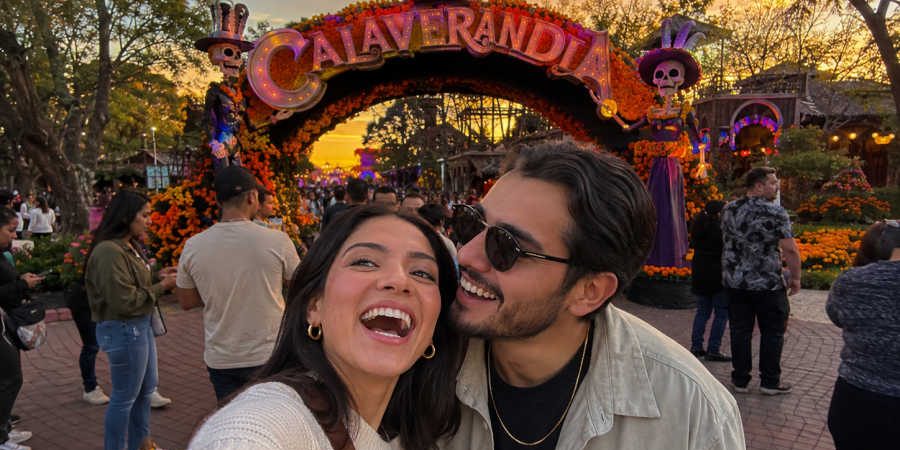
Calaverandia 2026 in Guadalajara: Dates, Hours & Must-See Day of the Dead Attractions
There is a time of year in Mexico when death is anything but silent.
Marigold petals mark a symbolic path home. Candles flicker beside family photographs. Altars are filled with favorite foods, music, memories and stories of those who are no longer physically with us.
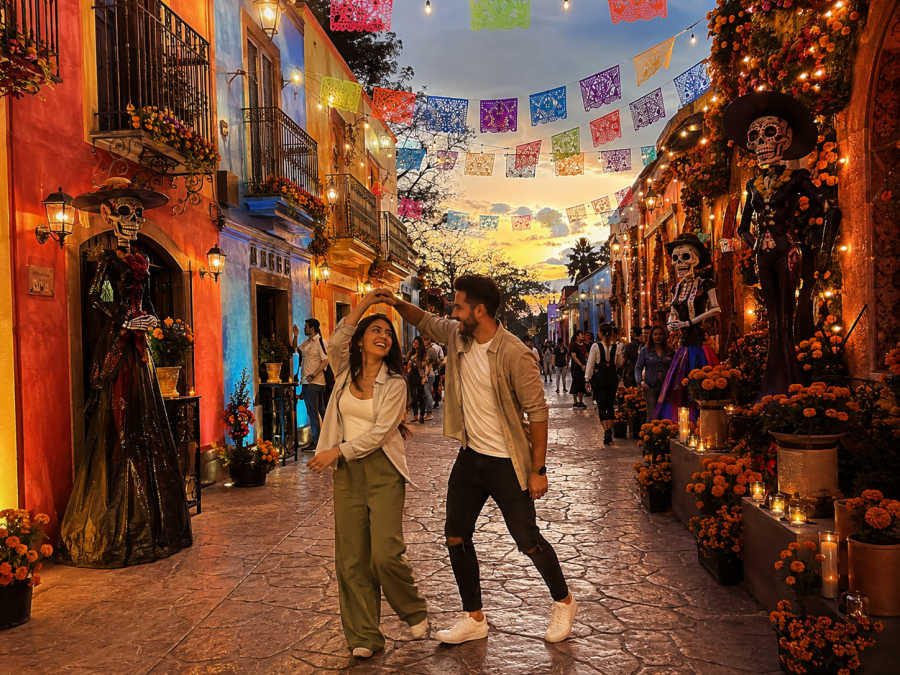
And in Guadalajara, Jalisco, one of Mexico’s most extraordinary celebrations of this tradition transforms an entire park into a spectacular world of color, music, light and imagination.
Welcome to Calaverandia 2026, Guadalajara’s immersive Day of the Dead theme park.
Beginning October 23, 2026, Parque Ávila Camacho will once again become a fantasy universe filled with monumental altars, giant skeletons, colorful Mexican villages, multimedia shows, interactive installations, music, food and hundreds of photo opportunities.
It isn’t quite an amusement park.
It isn’t a museum.
And despite all the skeletons, it certainly isn’t a haunted house.
Calaverandia is an immersive celebration where Mexican Día de Muertos traditions meet entertainment, technology, art and storytelling.
You don’t simply come here to learn about the Day of the Dead.
You walk right into it.
What is Calaverandia?
Calaverandia is a seasonal theme park in Guadalajara inspired entirely by Día de Muertos — Mexico’s Day of the Dead celebration.
The experience takes some of the tradition’s most recognizable elements — altars, marigolds, candles, skulls, music, copal incense, remembrance and Mexico’s unique relationship with death — and reimagines them through large-scale entertainment.
Visitors encounter multimedia performances, theatrical environments, artistic installations, interactive attractions, Mexican food, costumed characters and elaborate spaces designed to be explored and photographed.
For international travelers, this distinction is important:
Día de Muertos is not Mexican Halloween.
While Calaverandia can feel mysterious, theatrical and even otherworldly, its emotional center is remembrance rather than fear.
The Mexican Day of the Dead is ultimately about keeping memories alive.
And Calaverandia turns that idea into a visually spectacular nighttime experience.
Calaverandia 2026: Opening Date and Hours
Calaverandia 2026 is expected to welcome visitors beginning:
Friday, October 23, 2026
Location:
Parque Ávila Camacho, Guadalajara, Jalisco, Mexico
Typical operating hours for the 2026 season are:
Tuesday, Wednesday, Thursday and Sunday:
7:00 p.m. to midnight
Friday and Saturday:
7:00 p.m. to 1:00 a.m.
If there is one practical piece of advice worth remembering, it is this:
Arrive early.
The recommended visit is approximately four hours, and that time disappears surprisingly quickly once you begin exploring.
You stop for one photograph.
Then another.
Someone tells you the next ALMA performance begins soon.
You discover Omitlán.
Then you decide to explore the Inframundo.
Someone wants food.
Someone else finds another giant Catrina.
Suddenly, two hours have vanished.
Welcome to Calaverandia.
1. ALMA: The Show You Shouldn’t Miss
If you only have time to prioritize a few major experiences, ALMA should be near the top of the list.
ALMA has become one of Calaverandia’s signature productions, combining technology, light, music, performers, special effects and large-scale visual projections.
One of its most striking features is its use of water as part of the visual experience, creating the sensation that images and stories are appearing almost magically in front of the audience.
It is the kind of attraction that explains Calaverandia in a single experience.
Mexican tradition on one side.
Modern entertainment technology on the other.
And the visitor standing right in the middle.
ALMA is included among the main attractions for the 2026 season.
A useful strategy is to check performance times as soon as you enter the park and organize the rest of your evening around the shows you most want to see.
You do not want to discover at 11:55 p.m. that the performance you had been saving for later ended an hour ago.
2. Gran Altar Canoil: When Remembrance Becomes Spectacular
You cannot truly talk about Día de Muertos without talking about the ofrenda, or altar.
Altars are among the most meaningful elements of the tradition. Families decorate them with photographs, candles, flowers and foods connected to relatives and loved ones who have died.
At Calaverandia, that idea becomes monumental.
The Gran Altar Canoil is one of the emotional centers of the park, combining scale, music, lighting and visual storytelling in a tribute to memory and love.
This is an important part of the Calaverandia experience because not every attraction is designed simply to make you say “Wow.”
Some are designed to make you remember someone.
Some may make you smile.
And some may unexpectedly make you emotional.
That, too, is Día de Muertos.
3. Omitlán: A Mexican Town from Another World
Imagine a small Mexican town designed by someone with a love of folklore, color, skeletons and a very playful imagination.
You are beginning to picture Omitlán.
This is one of Calaverandia’s most colorful and photogenic areas.
The setting draws inspiration from traditional Mexican towns but transforms familiar streets and buildings into a fantasy environment filled with bright façades, decorative skeletons, flowers and surreal details.
Omitlán is the kind of place where you will repeatedly say:
“Wait — take another picture.”
And then:
“One more.”
And five minutes later:
“Okay, seriously, this is the last one.”
It won’t be.
The area is also connected with some of the park’s more playful attractions, making it particularly entertaining for families and visitors who enjoy interactive experiences.
4. Inframundo: Journey into Mexico’s Ancient Imagination
Then the mood changes.
The lights feel different.
The atmosphere becomes more mysterious.
You are entering the Inframundo — the Underworld.
This experience draws inspiration from pre-Hispanic concepts surrounding death and the spiritual journey beyond the world of the living.
For international travelers, it offers a fascinating glimpse into something much older than the modern Day of the Dead imagery many people recognize today.
Mexico’s relationship with death did not begin with sugar skulls and Instagram photographs.
Its roots reach deep into Indigenous civilizations, cosmologies and ideas about the journey between life and death.
Calaverandia translates some of those ideas into an environment visitors can physically walk through.
It is theatrical, mysterious and immersive.
And it is better experienced without knowing every detail in advance.
5. Cementerio Tecnolite: Where the Stories Are Not Quite Dead
Yes, you are entering a cemetery.
But forget the image of a silent, somber graveyard.
The Cementerio Tecnolite turns the cemetery into an interactive storytelling environment filled with tombs, flowers, candles, symbols and atmospheric lighting.
It is one of the places where international travelers may begin to understand a question frequently asked about the Mexican Day of the Dead:
Why is death surrounded by so much color?
Because Día de Muertos is not simply a celebration of death.
It is a celebration of having lived.
The marigolds, music, food and stories are ways of remembering the personality, humor and presence of someone who mattered.
That idea lies at the heart of the experience.
6. Taü: Another Stop in Calaverandia’s Fantasy World
Taü also forms part of the attractions included with general admission.
One of Calaverandia’s strengths is that the experience constantly changes rhythm.
Some areas are designed to be watched.
Others are meant to be walked through.
Some are interactive.
Others are theatrical.
And some exist simply to make you stop for a moment and take in the atmosphere.
That variety makes Calaverandia especially enjoyable for mixed groups and families.
Adults may become absorbed in the visual design of an altar while children are already asking the most important question of the evening:
“What are we doing next?”
7. La Plaza and El Pueblito: Mexico as a Nighttime Stage
After walking through fantasy worlds and mysterious landscapes, La Plaza and El Pueblito reconnect visitors with images that feel immediately Mexican.
These areas are included in the general admission experience for 2026.
But Calaverandia’s appeal is not limited to its headline attractions.
Much of the magic happens between them.
You may find yourself walking beneath illuminated trees, encountering a costumed character, hearing music in the distance or suddenly discovering an art installation you did not know was there.
That is one of the secrets of a successful immersive park:
The walk from one attraction to another should feel like part of the attraction itself.
8. Feria Limbo, Interactive Games and Fuente de Pelotas
Not everything at Calaverandia is dramatic or emotional.
There is plenty of room for pure fun.
The 2026 experience includes attractions such as Feria Limbo, interactive games and Fuente de Pelotas.
These lighter experiences help balance the larger productions and make the park especially appealing to families.
Different visitors will naturally develop different favorites.
One person may consider ALMA the highlight of the evening.
Another may love the Inframundo.
Children may want to return immediately to an interactive attraction.
And someone in your group will somehow have taken 147 photographs before you are halfway through the park.
All of them are experiencing Calaverandia correctly.
9. Giant Art, Catrinas and Photo Moments
If you enjoy travel photography, social media or simply collecting memorable vacation pictures, make sure your phone is charged.
Calaverandia is exceptionally visual.
The 2026 program includes art installations, oversized sculptures, costumed characters and dedicated photo moments throughout the park.
Giant skulls, monumental Catrinas, illuminated trees, marigold-covered installations, altars and fantasy environments create countless backgrounds for photographs.
And because the park comes alive after dark, the atmosphere changes throughout the evening.
Arrive near sunset and you may capture the warm golden light before nightfall.
Stay later and the same areas become dramatically different once thousands of lights illuminate the park.
One useful thing for visitors to know is that professional cameras are generally not permitted for normal admission. Personal photography is intended to be taken with mobile phones unless separate authorization has been obtained for professional or commercial photography.
So charge your smartphone.
And consider bringing a portable battery.
You may need it by photo number 148.
10. Trajineras, Gran Resbaladilla and the Comfort Zone
Visitors looking for an upgraded experience can consider the Comfort Pass.
In addition to the attractions included with general admission, the 2026 Comfort Pass includes access to experiences such as:
Comfort Zone
La Gran Resbaladilla
Las Trajineras
It also offers preferential seating at certain performances, subject to availability.
The Comfort Zone provides a place to slow down and relax among illuminated trees with views toward the lake, while enjoying Mexican dishes, drinks and cocktails.
After spending several hours walking between the worlds of the living and the dead, you may discover that even wandering souls appreciate somewhere comfortable to sit.
How Much Time Should You Allow for Calaverandia?
The recommended visit is approximately four hours.
But if you want to see the major shows, eat, take photographs, explore the artistic installations and walk through the attractions without constantly watching the clock, arriving when the park opens is a smart idea.
A simple strategy is to identify the performance times for ALMA and Gran Altar Canoil first.
Then build the rest of your evening around them.
Between performances, explore areas such as:
Omitlán
Inframundo
Cementerio Tecnolite
La Plaza
El Pueblito
Then leave enough time for food, photographs, interactive attractions and unexpected discoveries.
Trying to see everything without a basic plan can turn the evening into a race.
And Calaverandia is much more enjoyable when you allow yourself to wander.
Practical Information for International Visitors
Calaverandia takes place at Parque Ávila Camacho in Guadalajara, Jalisco, in the Lomas del Country area.
Because the park is largely an outdoor walking experience, comfortable shoes are strongly recommended.
Guadalajara evenings in late October and early November can become noticeably cooler after sunset, so bringing a light jacket is also a good idea.
Visitors may enter with items including strollers, crutches, wheelchairs and umbrellas.
Items that are generally prohibited include outside food and beverages, pets, drones, glass containers, aerosols, flammable substances and sharp objects.
Credit and debit cards are accepted.
The park also operates a cashless system, allowing visitors without a bank card to convert cash into a ticket or reloadable payment method that can be used inside the event.
International visitors should also keep in mind that much of the storytelling and cultural context naturally originates in Spanish and Mexican tradition.
That is not necessarily a disadvantage.
Sometimes simply watching the marigolds glow, listening to the music and seeing families react to the altars communicates more than a translation ever could.
Is Calaverandia Worth Visiting?
If you are traveling to Guadalajara during Día de Muertos season, Calaverandia is one of the city’s most distinctive nighttime experiences.
It does not replace visiting a traditional altar.
It does not replace observing Día de Muertos in a family or community setting.
And it should not.
Calaverandia does something different.
It takes some of the most recognizable symbols of Mexico’s Day of the Dead and transforms them into an ambitious nighttime entertainment experience.
There is color.
There is nostalgia.
There is music.
There is spectacle.
There is humor.
There is imagination.
And underneath all of it is an idea that visitors from almost anywhere in the world can understand:
We remember the people we love because remembering them keeps part of them with us.
Beginning October 23, 2026, when the sun begins to disappear behind Guadalajara and thousands of lights come alive inside Parque Ávila Camacho, another door between two worlds will open.
On the other side is Calaverandia.
The question is not whether you are brave enough to enter.
The question is:
Are you ready to experience one of Mexico’s most extraordinary traditions in an entirely different way?